

Melanotan II
- Home
- Melanotan II 10mg
Contents

What is melanotan II
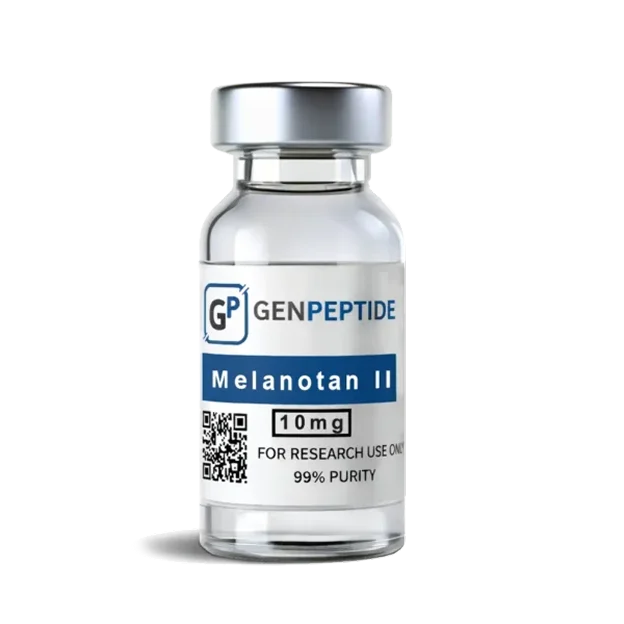
Melanotan II is a synthetic analog of α-melanocyte-stimulating hormone (α-MSH) that has been studied for its potential role in promoting skin pigmentation. Research discussions also note secondary physiological effects in certain settings. Conservative protocols typically begin with lower doses to help minimize temporary side effects such as nausea, flushing, or fatigue.
This educational outline presents a once-daily subcutaneous titration approach, using a practical dilution method for clear and simple insulin-syringe measurements.
- Reconstitution: Add 3.0 mL bacteriostatic water → final concentration approximately 3.3 mg/mL.
- Typical Daily Range: 250–1000 mcg once daily, with gradual titration over 8–12 weeks.
- Easy Measuring: At 3.3 mg/mL, 1 unit (0.01 mL) ≈ 33 mcg on a U-100 insulin syringe.
- Storage: Lyophilized product: store at −20°C (−4°F) or below.
After reconstitution: refrigerate at 2–8°C (35.6–46.4°F) and use within 1–2 weeks.

Melanotan II dosing protocol
Educational overview for dilution and daily administration
Standard / Gradual Titration (3 mL = 3.33 mg/mL)
| Week / Phase | Daily Dose | Units (Per Injection) (mL) |
|---|---|---|
| Week 1 | 250 mcg (0.25 mg) | 7.5 units (0.075 mL) |
| Week 2 | 500 mcg (0.5 mg) | 15 units (0.15 mL) |
| Week 3 | 750 mcg (0.75 mg) | 22.5 units (0.225 mL) |
| Week 4-8 | 1000 mcg (1 mg) | 30 units (0.30 mL) |
| Maintenance (after Week 8) | 500–1000 mcg (1–2× weekly) | 15–30 units (0.15–0.30 mL) |
Frequency
Inject once daily subcutaneously during the initial 8-week phase. After reaching desired pigmentation, transition to 1–2 injections per week for maintenance.
For smaller (≤0.10 mL) administrations, 30- or 50-unit insulin syringes may improve readability and precision.
Reconstitution Steps
Draw 3.0 mL of bacteriostatic water using a sterile syringe.
Inject slowly down the inside wall of the vial to reduce foaming. Avoid shaking vigorously.
Gently roll or swirl the vial until the powder is fully dissolved.
Label the vial with the reconstitution date and store refrigerated at 2–8°C (35.6–46.4°F), protected from light.
Important Notice
This guide is provided for educational purposes only and does not constitute medical advice. Melanotan II is not an approved medication and is intended for research use only.

Preparing Melanotan II for Research Use
Melanotan II typically arrives as a sterile lyophilized (freeze-dried) peptide powder in a vial. Before use in a laboratory setting, it must be reconstituted with an appropriate sterile solvent so that it can be accurately measured and dosed in research protocols.
Required Materials
- Sterile vial of Melanotan II peptide powder
- Bacteriostatic water or suitable sterile aqueous solvent (for dissolving lyophilized peptide)
- Alcohol swabs
- Sterile syringes and needles (e.g., insulin syringes for small volumes)
- Clean workspace with aseptic technique

Side Effects of Melanotan II
Summary of reported observations from research settings and case reports.
Potential Observed Effects
- Increased skin pigmentation through melanocortin receptor stimulation.
- Gradual darkening of existing freckles or moles in some individuals.
- Appetite changes have been reported in certain cases.
- Transient physiological responses related to melanocortin receptor activity.
Commonly Reported Side Effects
- Nausea (often dose-dependent).
- Facial flushing or warmth shortly after administration.
- Mild fatigue or dizziness.
- Temporary changes in libido.
- Injection-site irritation such as redness or mild discomfort.
Important Safety Warnings
- Not FDA-approved: This compound is not approved for medical use in many countries. Quality, purity, and safety are not regulated in the same way as approved medications.
- Limited clinical data: Long-term safety has not been well established in large-scale human trials.
- Cardiovascular effects: Temporary increases in heart rate and blood pressure have been reported.
- Pigmented lesion changes: Darkening of existing moles or freckles may occur; any noticeable skin changes should be evaluated by a licensed healthcare professional.
- Potential systemic risks: High doses or improper use may increase the likelihood of adverse reactions.
Disclaimer
This information is provided for educational purposes only and does not constitute medical advice. Individuals should consult a qualified healthcare professional before considering any research chemical or unapproved compound.

Storage Information
Proper storage helps maintain peptide stability and integrity.
- Lyophilized (Unmixed) Form : Store in a freezer at or below −20°C (−4°F) in a dry, dark environment. Keep sealed and protected from moisture.
- After Reconstitution : Refrigerate at 2–8°C (35.6–46.4°F). Minimize light exposure and avoid temperature fluctuations.
- Avoid Repeated Freeze–Thaw Cycles : Do not repeatedly freeze and thaw prepared solutions, as this may reduce stability.
- Moisture & Light Protection : Always keep vials tightly sealed and stored away from direct light to help preserve compound integrity.
- Room Temperature Handling : Allow refrigerated vials to reach room temperature before opening to reduce condensation buildup.
Important Notice
These are general laboratory handling practices for research peptides. Always follow manufacturer guidance and applicable regulations. This information is for educational purposes only and does not constitute medical advice.

References
We suggest sourcing high-quality 5-Amino-IMQ (10 mg) from a reputable laboratory supplier that provides transparent testing and documentation.
Peer-Reviewed Research
Dorr RT et al. (1996)
Phase I clinical study evaluating melanocortin analog effects in healthy volunteers.
Nelson M.E. et al. (2012)
Case report describing systemic toxicity following non-medical melanocortin analog injection.
Public Health & Regulatory Guidance
Health Service Executive (HSE) Ireland
Public health advisory regarding the risks of injectable tanning agents.
U.S. National Library of Medicine
Educational material on safe subcutaneous injection practices.
Centers for Disease Control and Prevention (CDC)
Injection safety and best-practice guidelines for medication administration.
NCBI Bookshelf – Injection Safety & Parenteral Administration
Clinical guidance on aseptic preparation and safe administration techniques.